This project was part of a research internship program with Mitacs Globalink. Over the course of 12 weeks, I had the opportunity to support research in the field of HCI at the University of British Columbia in Kelowna, Canada. I was assigned the research topic "Hand-Based Teleportation in Virtual Reality," with the goal of writing a paper for submission to an academic conference.
TOOLS USED
Unity, Overleaf
ROLE
Interaction Designer, Developer, Researcher
This project was part of a research internship program with Mitacs Globalink. Over the course of 12 weeks, I had the opportunity to support research in the field of HCI at the University of British Columbia in Kelowna, Canada. I was assigned the research topic "Hand-Based Teleportation in Virtual Reality," with the goal of writing a paper for submission to an academic conference.
TOOLS USED
Unity, Overleaf
ROLE
Interaction Designer, Developer, Researcher
HandPort
Interaction Technique
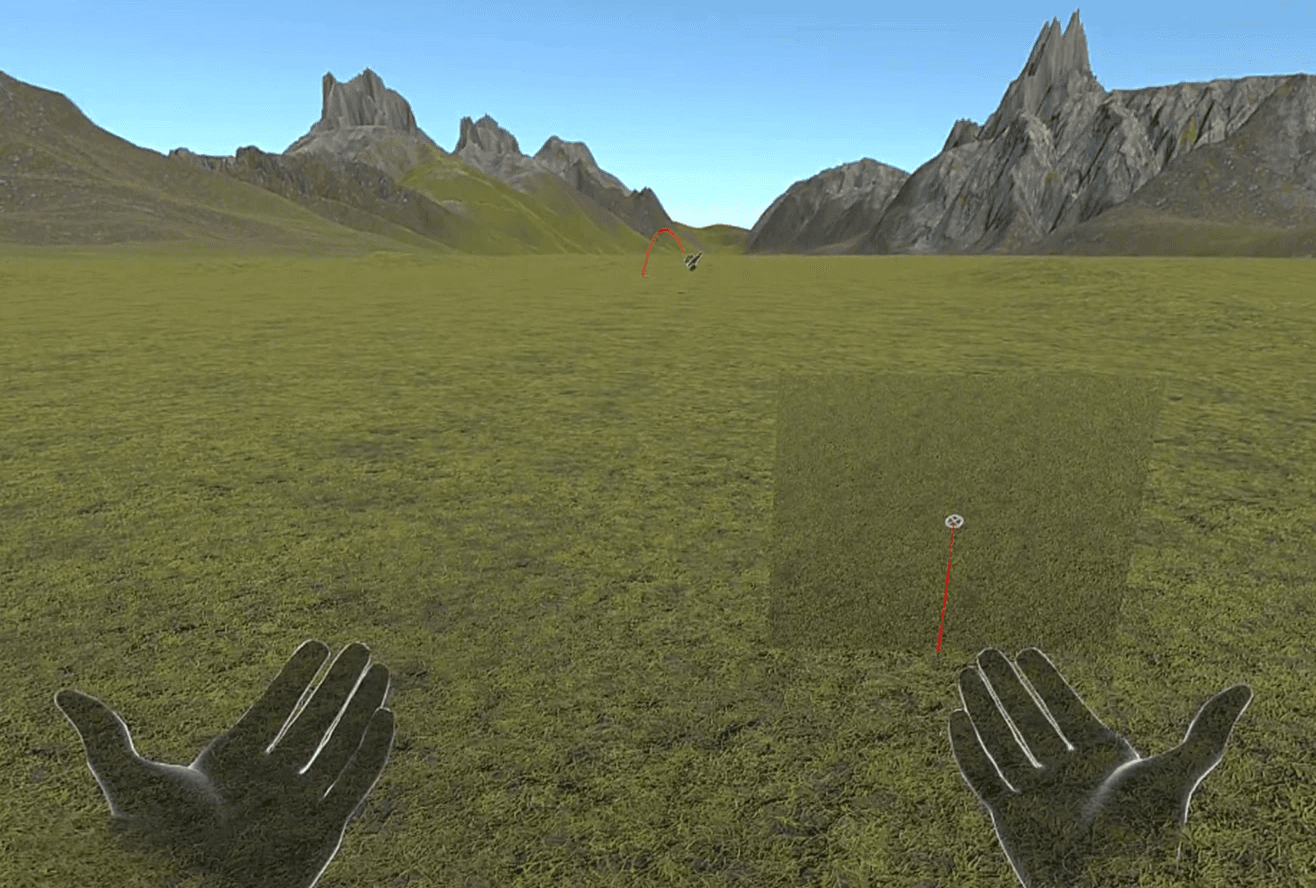
Traditional teleportation methods, where users point and select a destination, are effective for short distances but often struggle with imprecise aiming, leading to longer completion times and unintended teleportation. To address these challenges, a novel technique called HandPort was developed, amplifying virtual hand positions to enhance precision and efficiency in long-distance navigation.
HandPort tracks the movement of the right hand by measuring its displacement along the line from the shoulder to the wrist. This movement is then scaled to determine the corresponding distance the hand travels in the virtual environment.
Mapping Functions
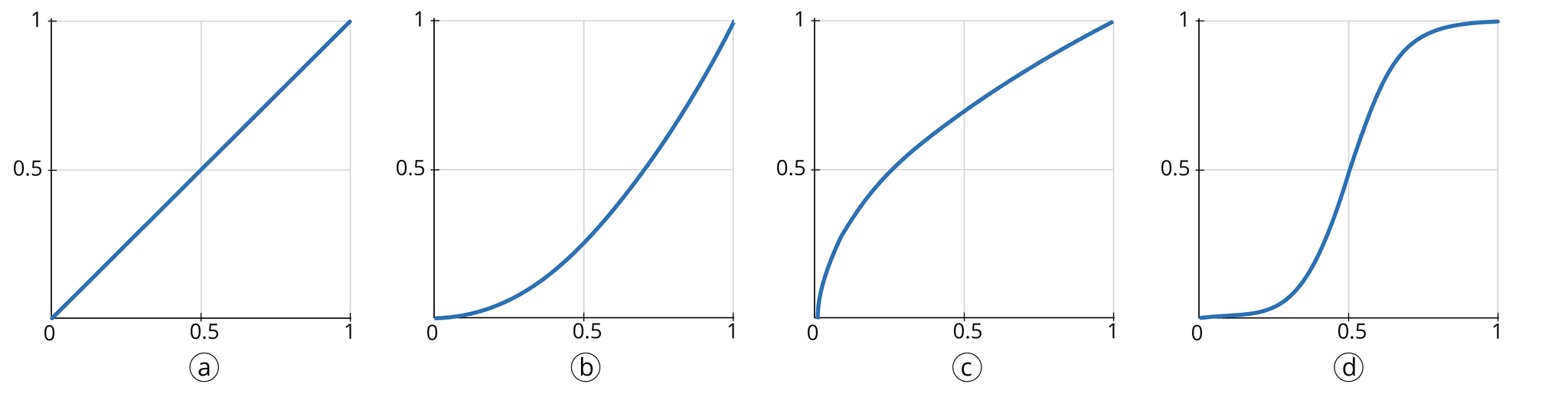
To optimize the translation of real-world hand movements into virtual interactions, four different mapping functions were implemented: (a) linear, (b) power, (c) root, and (d) sigmoid. Each function was to be tested to identify the most effective approach for enhancing precision and usability in navigation.
Interaction Technique
Traditional teleportation methods, where users point and select a destination, are effective for short distances but often struggle with imprecise aiming, leading to longer completion times and unintended teleportation. To address these challenges, a novel technique called HandPort was developed, amplifying virtual hand positions to enhance precision and efficiency in long-distance navigation.
HandPort tracks the movement of the right hand by measuring its displacement along the line from the shoulder to the wrist. This movement is then scaled to determine the corresponding distance the hand travels in the virtual environment.
Mapping Functions
To optimize the translation of real-world hand movements into virtual interactions, four different mapping functions were implemented: (a) linear, (b) power, (c) root, and (d) sigmoid. Each function was to be tested to identify the most effective approach for enhancing precision and usability in navigation.
Design Factors
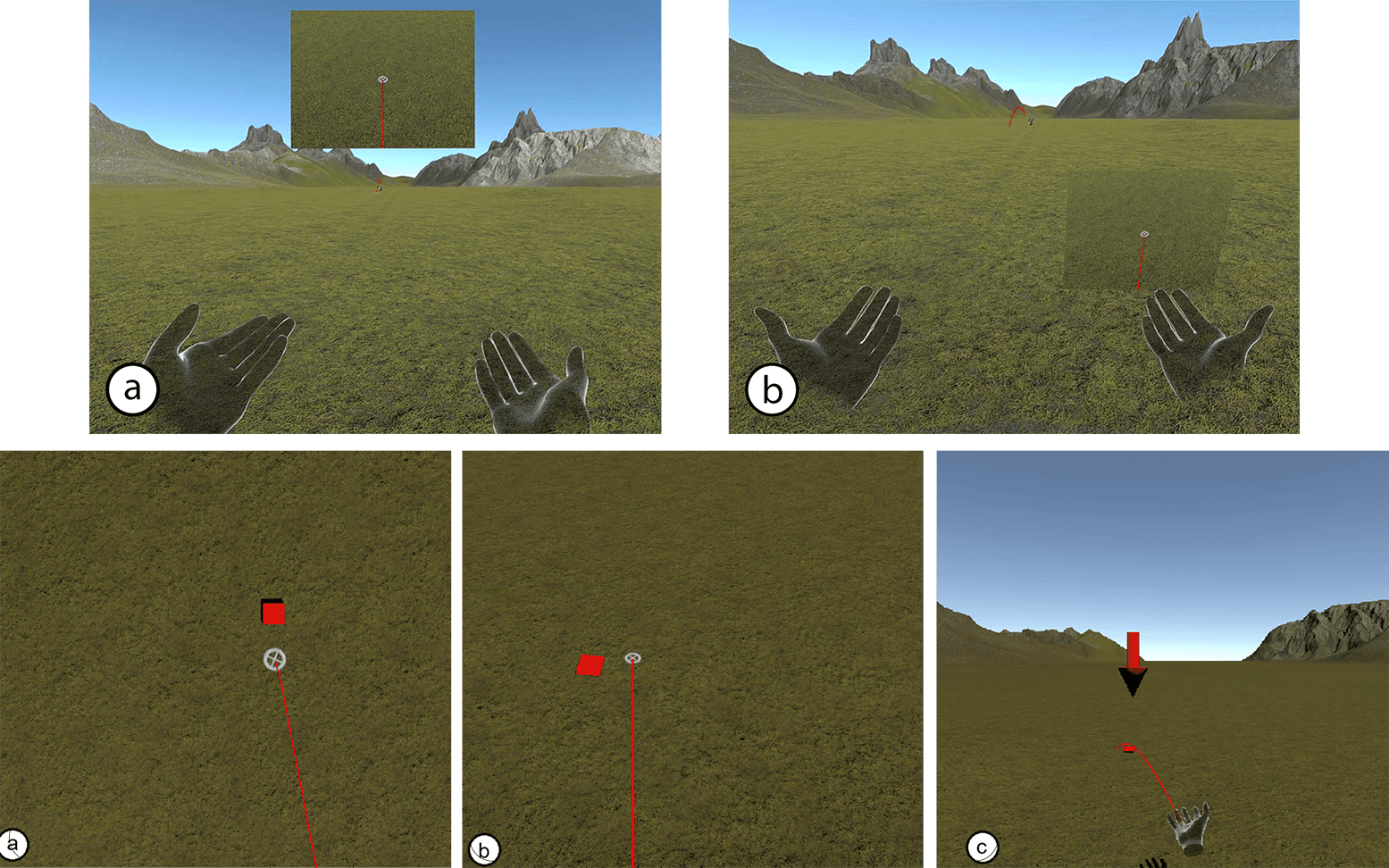
To improve precision when selecting distant targets in HandPort, a closer view of the target selection was introduced through a dedicated window. Two key factors were implemented in this feature: camera anchor with two and camera perspective with three permutations.
CAMERA ANCHOR
The camera anchor permutations included (a) HMD-anchored and (B) Hand-anchored.
CAMERA PERSPECTIVE
The camera perspective permutations included (a) top-down ray , (b) perspective ray & (c) perspective hand.
Design Factors
To improve precision when selecting distant targets in HandPort, a closer view of the target selection was introduced through a dedicated window. Two key factors were implemented in this feature: camera anchor with two and camera perspective with three permutations.
CAMERA ANCHOR
The camera anchor permutations included (a) HMD-anchored and (B) Hand-anchored.
CAMERA PERSPECTIVE
The camera perspective permutations included (a) top-down ray , (b) perspective ray & (c) perspective hand.
Study Design
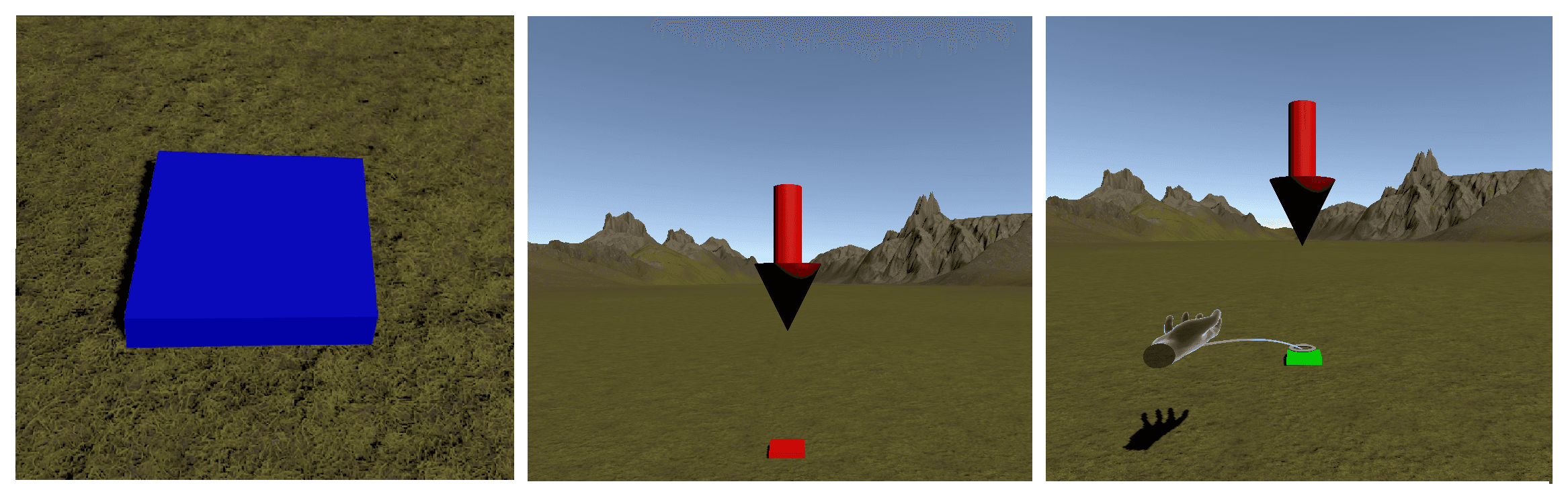
The teleportation tasks were designed to have participants teleport from a blue "start" cube to a red "target" cube.
To begin a trial, participants used the teleportation ray to move onto the start cube. Upon successful teleportation, the trial commenced, and the red target cube appeared. When the teleportation ray intersected with the target cube, it highlighted green, providing visual feedback that participants could now trigger teleportation. The attempt ended with the successful teleportation onto the target cube.
Study Design
The teleportation tasks were designed to have participants teleport from a blue "start" cube to a red "target" cube.
To begin a trial, participants used the teleportation ray to move onto the start cube. Upon successful teleportation, the trial commenced, and the red target cube appeared. When the teleportation ray intersected with the target cube, it highlighted green, providing visual feedback that participants could now trigger teleportation. The attempt ended with the successful teleportation onto the target cube.
Lessons Learned
CHALLENGES & OPPORTUNITIES
The project faced challenges in communication, particularly in defining clear goals with the professor, which created uncertainty about the direction to take. Additionally, I recognized early on that I would not be able to complete the project within the given timeframe.
OUTLOOK
With the end of my internship the project was transitioned to a master's student, ensuring its continuation and further development.
Lessons Learned
CHALLENGES & OPPORTUNITIES
The project faced challenges in communication, particularly in defining clear goals with the professor, which created uncertainty about the direction to take. Additionally, I recognized early on that I would not be able to complete the project within the given timeframe.
OUTLOOK
With the end of my internship the project was transitioned to a master's student, ensuring its continuation and further development.
Let's Work Together.