This research project was part of a university module in groups of three people. Our group aimed to enhance tourists' Sense Of Place with an Autonomous Shuttle Bus using a Virtual Reality simulation. Despite providing an enhanced audio experience, we observed no significant differences in Sense of Place, interest, or retention compared to a baseline group.
TOOLS USED
Unity, Overleaf
ROLE
UX Reseacher, UX/ UI Designer, Developer
This research project was part of a university module in groups of three people. Our group aimed to enhance tourists' Sense Of Place with an Autonomous Shuttle Bus using a Virtual Reality simulation. Despite providing an enhanced audio experience, we observed no significant differences in Sense of Place, interest, or retention compared to a baseline group.
TOOLS USED
Unity, Overleaf
ROLE
UX Reseacher, UX/ UI Designer, Developer
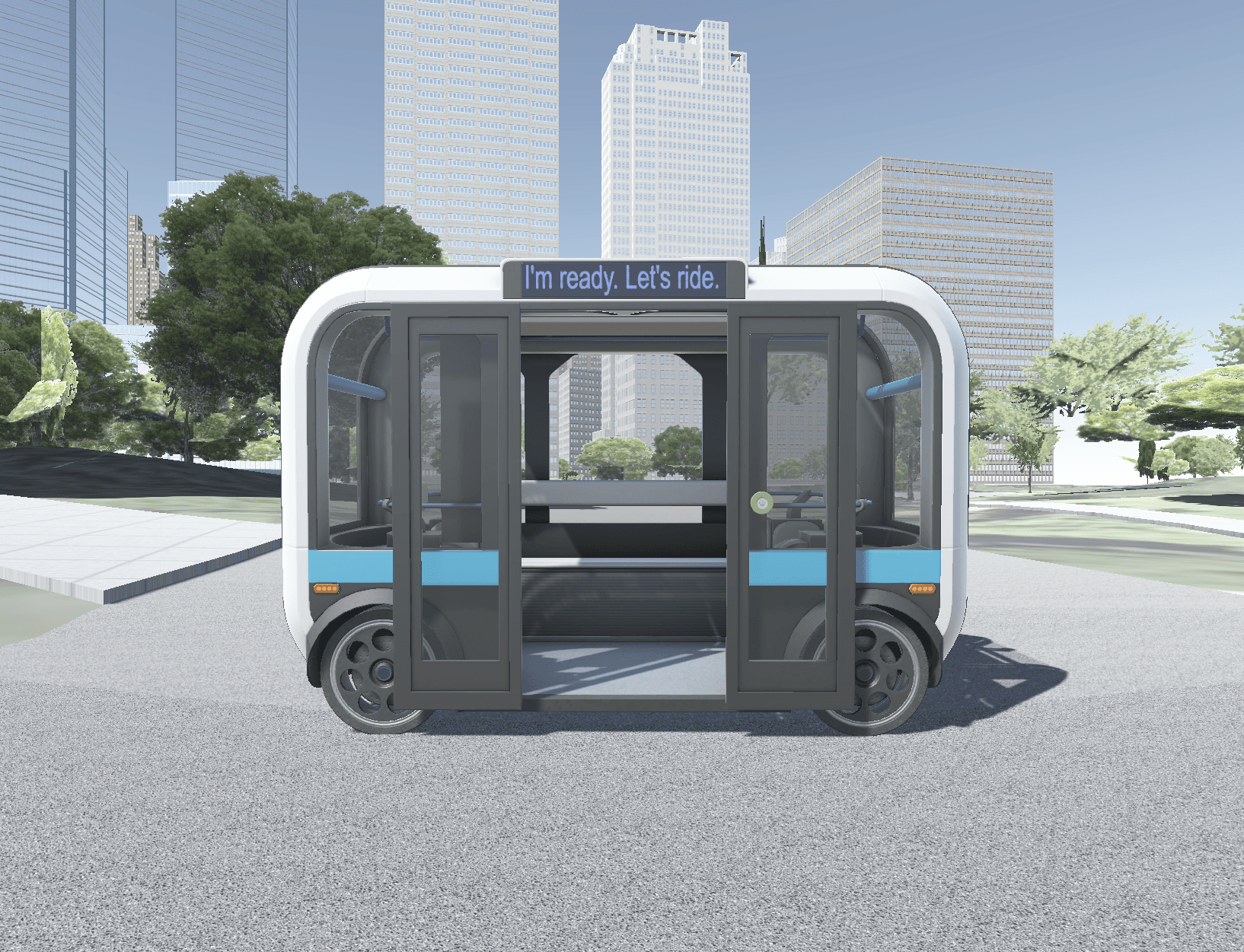
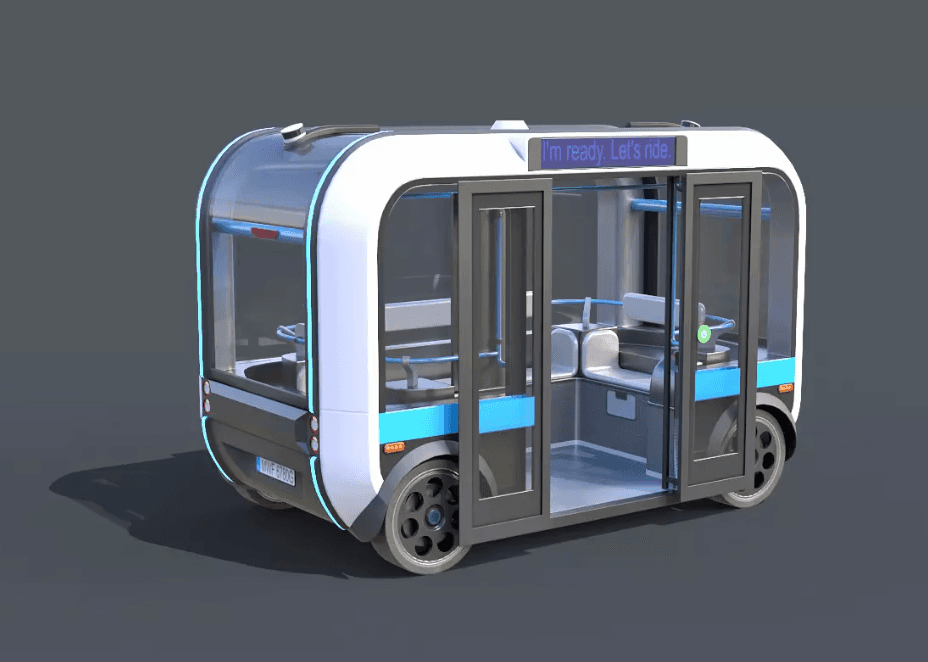
Shuttle Bus

Research Question
“How can auditory information provided by announcements of bus drivers in an autonomous shuttle bus enhance a tourist's sense of place?”
Hypothesis
Based on our research question, we formulated the following three hypotheses for operationalization. While the initial two hypotheses are designed to gather quantitative data , the third hypothesis is structured to assess qualitative data.
Playful and well-crafted auditory information has a positive effect on participants’ sense of place as compared to baseline bus driver announcements.
Participants in the enhanced audio group retain facts about points of interests better than passengers in the baseline group.
Participants in the enhanced audio group consider the place experience by well-designed audio input as more interesting and enjoyable.
Research Question
“How can auditory information provided by announcements of bus drivers in an autonomous shuttle bus enhance a tourist's sense of place?”
Hypothesis
Based on our research question, we formulated the following three hypotheses for operationalization. While the initial two hypotheses are designed to gather quantitative data , the third hypothesis is structured to assess qualitative data.
Playful and well-crafted auditory information has a positive effect on participants’ sense of place as compared to baseline bus driver announcements.
Participants in the enhanced audio group retain facts about points of interests better than passengers in the baseline group.
Participants in the enhanced audio group consider the place experience by well-designed audio input as more interesting and enjoyable.

VR Simulation
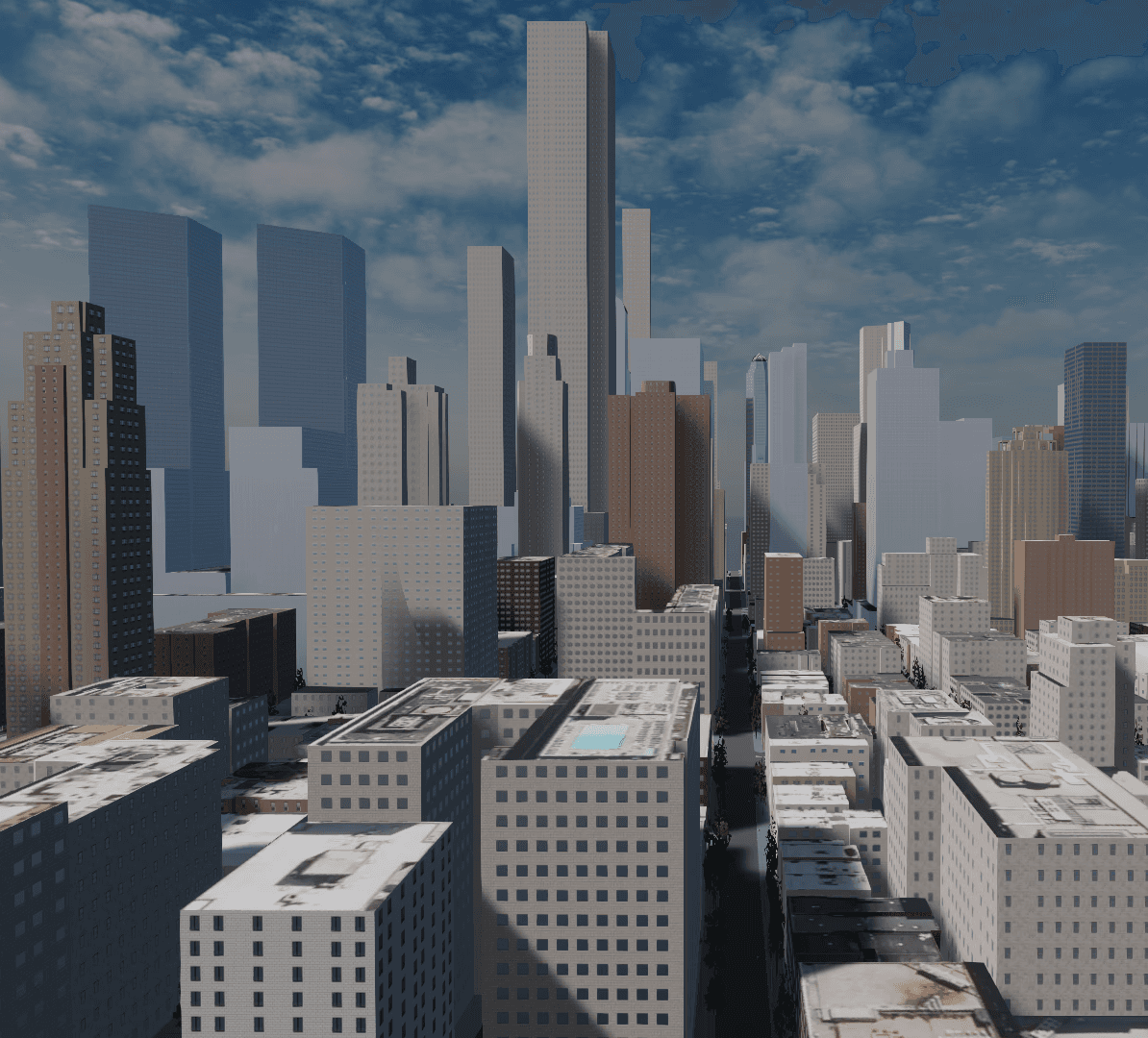
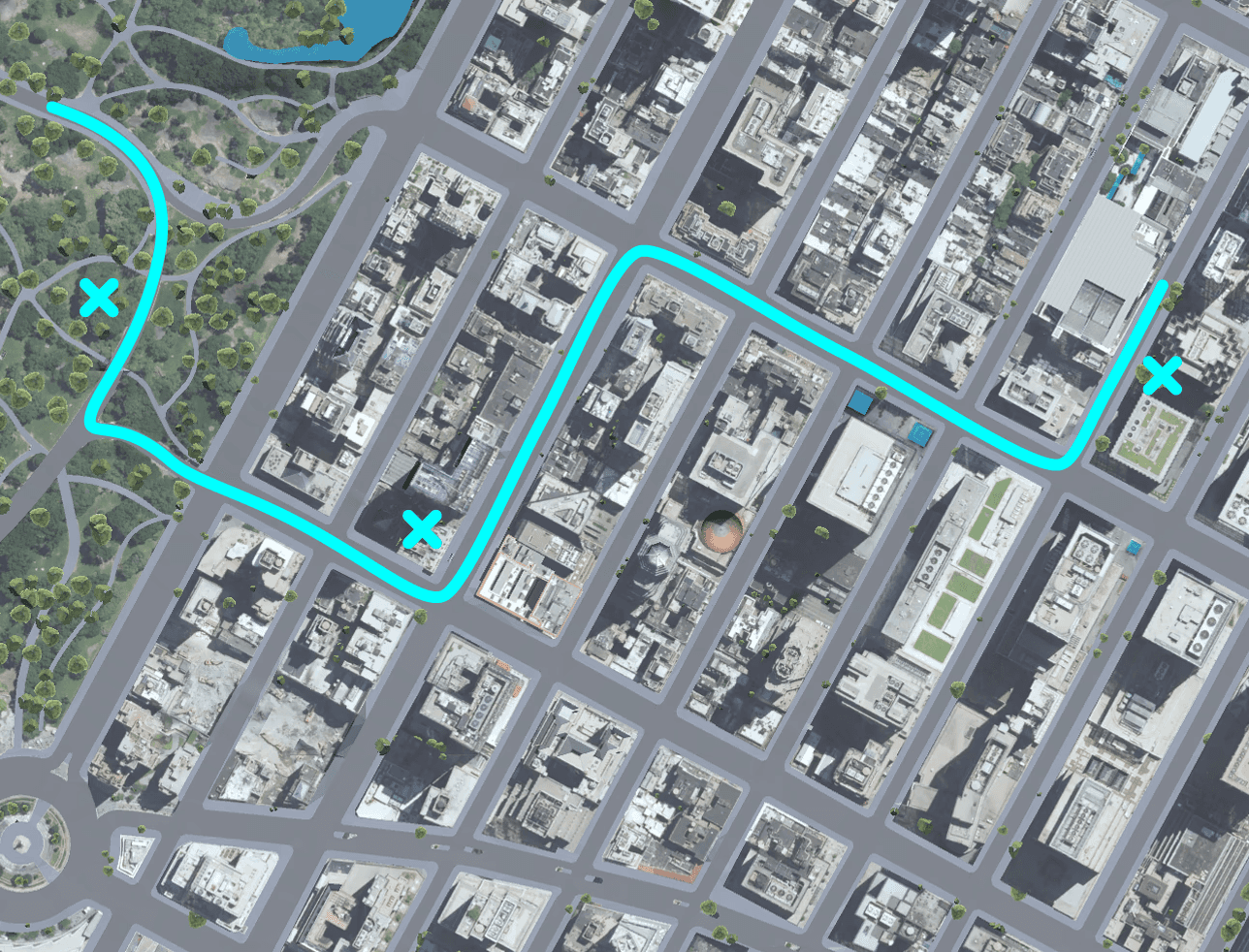
To examine the formulated hypotheses, a virtual reality simulation was developed based on the Unity software. A combination of freely available and commercially procured 3D assets were composed to create the scene, and scripts for the simulation were written internally.
Auditory Concepts
V1: PLAYFUL ANNOUNCEMENTS
The playful announcements were designed to consist of:
earcon + speech + auditory icon + speach
V2: BASELINE ANNOUNCEMENTS
The baseline announcements were designed to consist of:
earcon + speech
VR Simulation
To examine the formulated hypotheses, a virtual reality simulation was developed based on the Unity software. A combination of freely available and commercially procured 3D assets were composed to create the scene, and scripts for the simulation were written internally.
Auditory Concepts
V1: PLAYFUL ANNOUNCEMENTS
The playful announcements were designed to consist of:
earcon + speech + auditory icon + speach
V2: BASELINE ANNOUNCEMENTS
The baseline announcements were designed to consist of:
earcon + speech
Results
We analyzed our data with the software JASP. We used t-tests to test our hypotheses and choose a 95% as a confidence interval. Overall, we collected 31 usable data sets.
Playful and well-crafted auditory information has a positive effect on participants’ sense of place. We found no significant difference in experienced sense of place between the groups but a medium-sized effect size in favor of the enhanced audio group.
Participants in the enhanced audio group retain facts about points of interests better. Similarly to our sense of place scale, our retention test yielded a medium effect size, but no significant difference between groups.
Participants in the enhanced audio group consider the place experience by well-designed audio input as more interesting and enjoyable. However, no significant difference between groups could be found.
Results
We analyzed our data with the software JASP. We used t-tests to test our hypotheses and choose a 95% as a confidence interval. Overall, we collected 31 usable data sets.
Playful and well-crafted auditory information has a positive effect on participants’ sense of place. We found no significant difference in experienced sense of place between the groups but a medium-sized effect size in favor of the enhanced audio group.
Participants in the enhanced audio group retain facts about points of interests better. Similarly to our sense of place scale, our retention test yielded a medium effect size, but no significant difference between groups.
Participants in the enhanced audio group consider the place experience by well-designed audio input as more interesting and enjoyable. However, no significant difference between groups could be found.
Lessons Learned
CONCLUSION & EXPLANATION
We cannot support any of our three hypotheses with the results we found. The measurements we employed did not yield significant results in regards to sense of place, learning/retention, or interestingness.
Possible influences could consist of the difficulty of building a sense of place, its needed time frame, bus driver announcements not being appropriate mediums for the task.
FURTHER RESEARCH
Overall, we think that our approach holds the potential to aid in the design of wholesome tourist experiences with autonomous shuttle buses and recommend that similar studies in the future attempt to improve extrinsic validity by positioning themselves closer to the reality experienced by the tourist.
Lessons Learned
CONCLUSION & EXPLANATION
We cannot support any of our three hypotheses with the results we found. The measurements we employed did not yield significant results in regards to sense of place, learning/retention, or interestingness.
Possible influences could consist of the difficulty of building a sense of place, its needed time frame, bus driver announcements not being appropriate mediums for the task.
FURTHER RESEARCH
Overall, we think that our approach holds the potential to aid in the design of wholesome tourist experiences with autonomous shuttle buses and recommend that similar studies in the future attempt to improve extrinsic validity by positioning themselves closer to the reality experienced by the tourist.

Let's Work Together.