This project originated as an academic task with the central theme being influencer marketing. The goal was to conceptualise an app to function as a platform to strengthen the bond between influencers and their followers, cooperation partners or charities to collaborate with. Our focus gravitated towards refining the interaction between influencers and corporate entities.
TOOLS USED
Miro, Figma
ROLE
UX Researcher, UX/ UI Designer
This project originated as an academic task with the central theme being influencer marketing. The goal was to conceptualise an app to function as a platform to strengthen the bond between influencers and their followers, cooperation partners or charities to collaborate with. Our focus gravitated towards refining the interaction between influencers and corporate entities.
TOOLS USED
Miro, Figma
ROLE
UX Researcher, UX/ UI Designer
Spryze
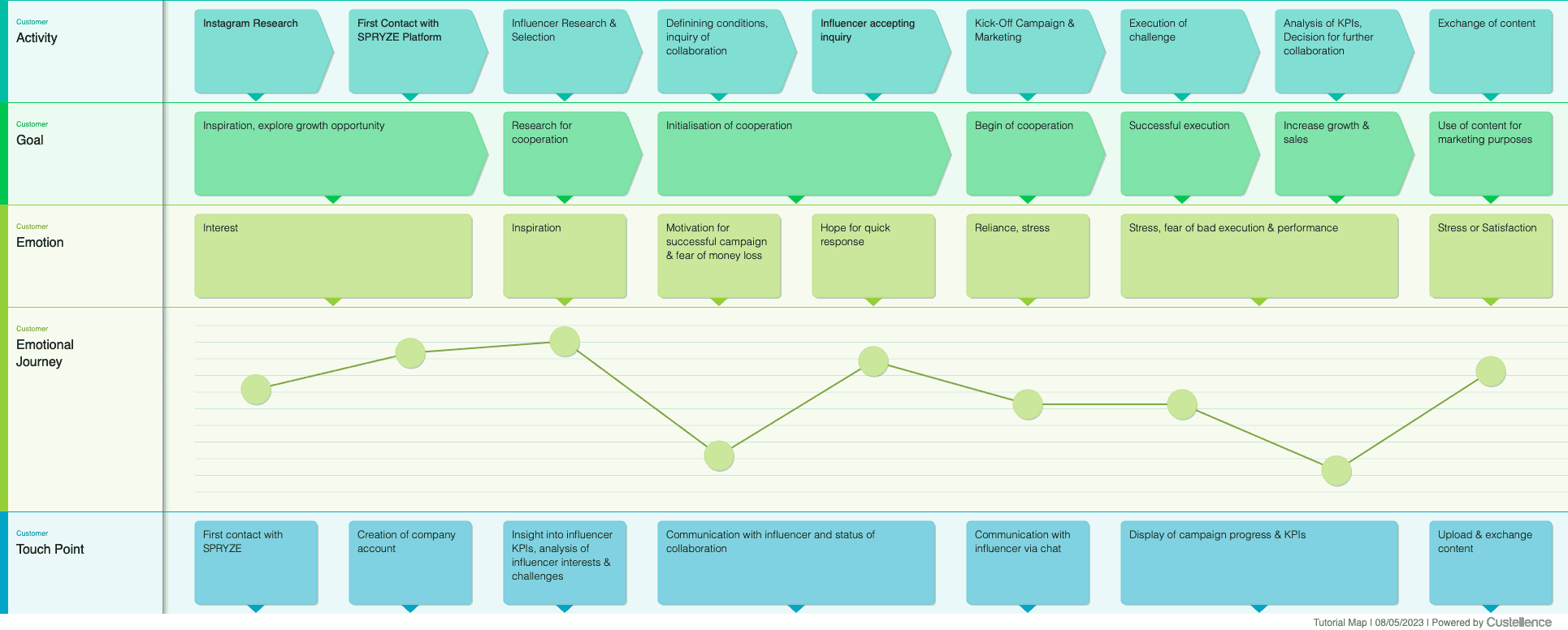
After conducting market research on prevalent tools in the realm of influencer and corporate collaboration, a customer journey was established. During this process, the main pain points experienced by users, specifically the social media manager in our scenario, were identified and documented.
The four identified pain points for the social media manager looking for suitable collaboration partners included:
Extensive Research
Current Campaign Status
Correct Follow-Ups
Data Exchange
After conducting market research on prevalent tools in the realm of influencer and corporate collaboration, a customer journey was established. During this process, the main pain points experienced by users, specifically the social media manager in our scenario, were identified and documented.
The four identified pain points for the social media manager looking for suitable collaboration partners included:
Extensive Research
Current Campaign Status
Correct Follow-Ups
Data Exchange

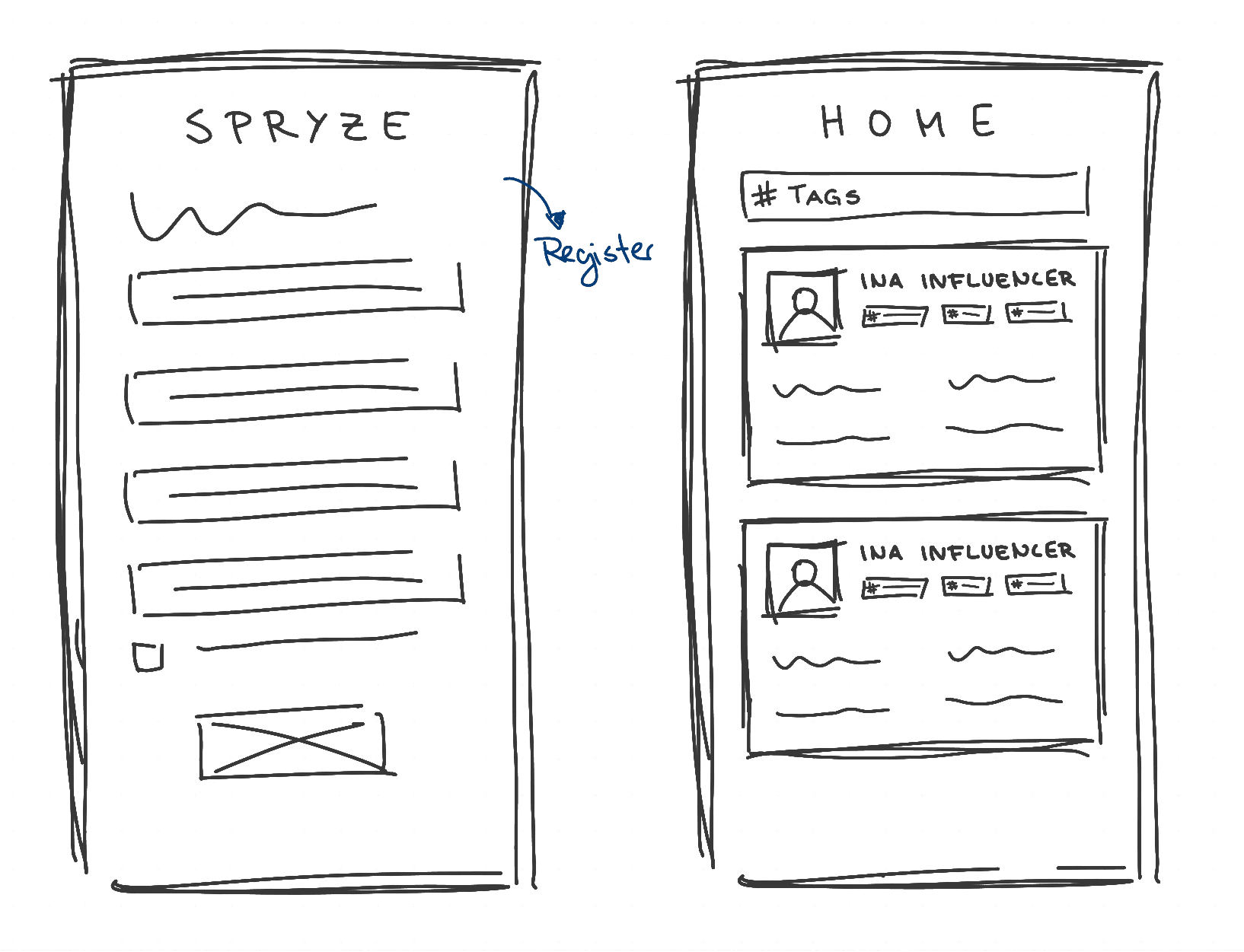
Building upon the identified pain points, first sketches were created to address and alleviate these issues while fulfilling the objectives of a collaborative partnership. Following that, the sketches were translated into a low-fidelity prototype using Figma. It consisted of five main sections serving their corresponding purposes:
Home - Dashboard
Matching - Research
Campaign - Current Status
Profile - Settings
Chat - Communication
Building upon the identified pain points, first sketches were created to address and alleviate these issues while fulfilling the objectives of a collaborative partnership. Following that, the sketches were translated into a low-fidelity prototype using Figma. It consisted of five main sections serving their corresponding purposes:
Home - Dashboard
Matching - Research
Campaign - Current Status
Profile - Settings
Chat - Communication
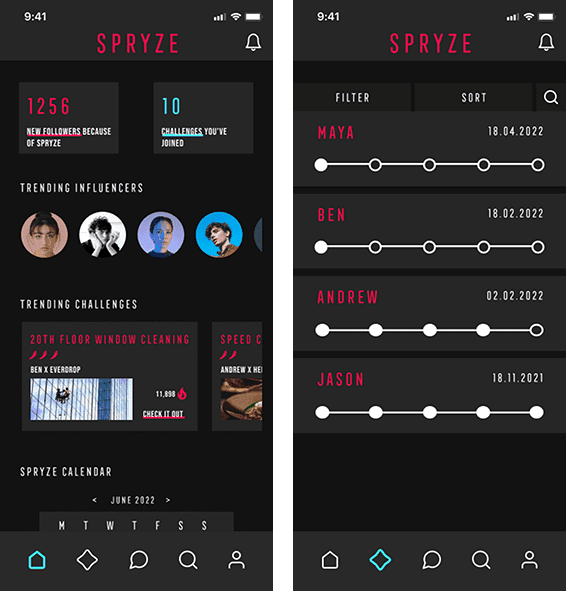
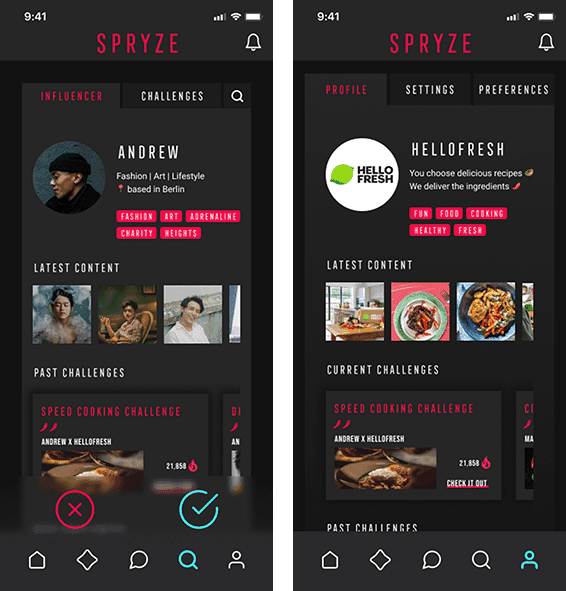
Based on the low-fidelity prototype, initial user feedback on user-friendliness and intuitiveness was gathered. This feedback was taken into consideration for the design of the high-fidelity prototype.
A UEQ (User Experience Questionnaire) was administered on the high-fidelity prototype, with scores of 2.15 for attractiveness, 1.8 for perspicuity, 1.83 for efficiency, 1.95 for dependability, 2.0 for stimulation, and 1.7 for novelty. Additionally, a SUS (System Usability Scale) evaluation was conducted, yielding an overall usability score of 76,2 indicating good usability based on industry benchmarks.
Based on the low-fidelity prototype, initial user feedback on user-friendliness and intuitiveness was gathered. This feedback was taken into consideration for the design of the high-fidelity prototype.
A UEQ (User Experience Questionnaire) was administered on the high-fidelity prototype, with scores of 2.15 for attractiveness, 1.8 for perspicuity, 1.83 for efficiency, 1.95 for dependability, 2.0 for stimulation, and 1.7 for novelty. Additionally, a SUS (System Usability Scale) evaluation was conducted, yielding an overall usability score of 76,2 indicating good usability based on industry benchmarks.
Lessons Learned
CHALLENGES & OPPORTUNITIES
Our project encountered some challenges in the realm of time management and resource utilization. Balancing our workload on this and other projects demanded careful coordination and prioritization. Recruiting participants for user testing emerged as another hurdle. Our commitment to maintaining the integrity of our target group, while avoiding repetitive use of the same test subjects, heightened the complexity of participant recruitment.
COMPROMISES
While we have invested considerable time in this project, treating it as a real-world endeavor would necessitate additional refinement and a more profound focus on accessibility considerations. Despite this, substantial progress has been achieved, and the feedback gathered from user testing has proven to be immensely valuable.
Lessons Learned
CHALLENGES & OPPORTUNITIES
Our project encountered some challenges in the realm of time management and resource utilization. Balancing our workload on this and other projects demanded careful coordination and prioritization. Recruiting participants for user testing emerged as another hurdle. Our commitment to maintaining the integrity of our target group, while avoiding repetitive use of the same test subjects, heightened the complexity of participant recruitment.
COMPROMISES
While we have invested considerable time in this project, treating it as a real-world endeavor would necessitate additional refinement and a more profound focus on accessibility considerations. Despite this, substantial progress has been achieved, and the feedback gathered from user testing has proven to be immensely valuable.

Let's Work Together.